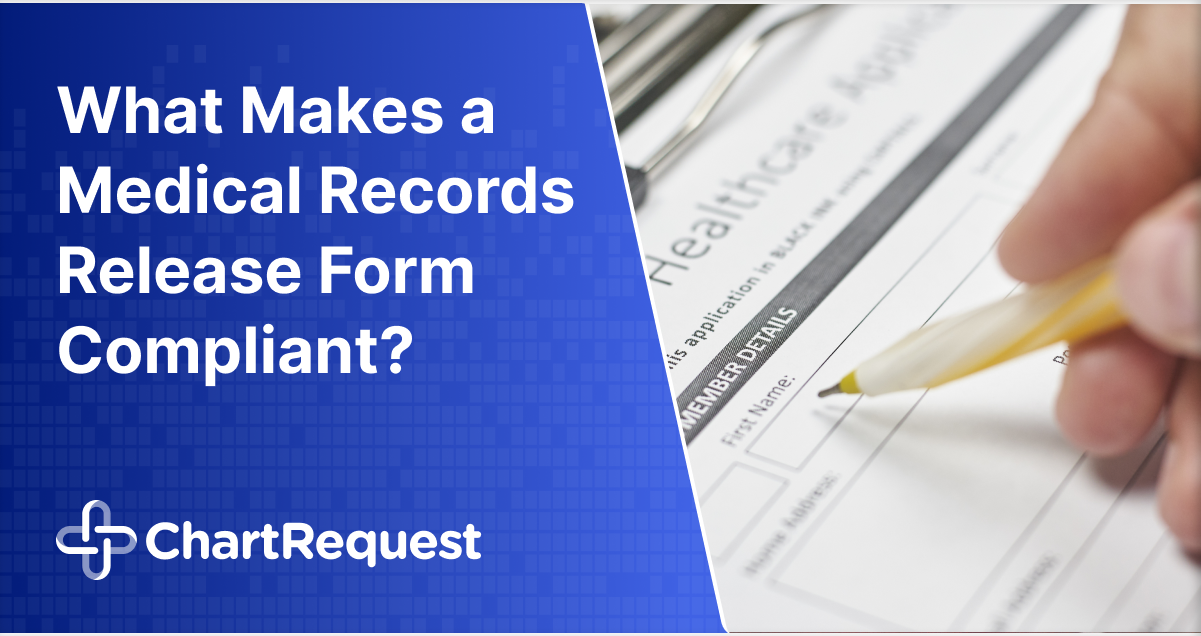


Compliant medical records release forms protect sensitive data by preventing healthcare professionals from releasing health records without patient consent. These signed forms are essential for HIPAA Privacy Rule compliance.
Healthcare professionals must validate and approve requests for medical records before releasing them. Given this potentially lengthy process, accurate medical records release forms are essential.
In this article, let’s explore what makes a medical records release form compliant. We will also include tips on avoiding common compliance pitfalls and steep HIPAA fines.
Table of contents
What is a Medical Records Release Form
A medical records release form is a document that authorizes the release of patient health information from one healthcare provider to a requestor. Requestors include:
- Patients and their legal guardians,
- Healthcare providers,
- Attorneys and law firms,
- Insurance companies,
- and more.
The primary purpose of this form is to protect patients’ privacy by ensuring healthcare professionals only share sensitive health information with authorized individuals or organizations.
What Are the Key Elements of a Compliant Medical Records Release Form?
A study by the American Health Information Management Association revealed that up to 50% of denied claims stemmed from inadequate patient identification. This emphasizes the importance of well-structured and compliant release forms.
A proper and compliant medical records release form should include the following essential elements:

1. Patient Information
The first section of the form should contain the patient’s personal information, such as their full name, date of birth, address, and contact details.
This information helps healthcare professionals identify the patient and release the correct medical records. It’s especially helpful when an organization has multiple patients with the same name.
2. Purpose of Request
The form should clearly state the reason for the request. This may include treatment, legal proceedings, personal records, or other acceptable purposes. This helps limit the scope of information they release and ensures that they only share pertinent information.
3. Dates of Service
This section specifies the dates of service healthcare professionals should target when searching for the correct medical records. This helps ensure healthcare professionals only release the minimum necessary information to fulfill each request.
4. Recipient Information
The form should include details about who will receive the medical records. This should include the requestor’s name, contact information, and their relationship with the patient.
5. Valid Authorization Signature
A compliant medical records release form must include the patient’s or legal guardian’s valid signature. This serves as written consent to confirm the patient has authorized the release of information.
6. Date of Signature
When patients sign a medical records release form, they should also provide a date of the signature. This helps healthcare professionals determine whether the authorization is valid and recent.
7. Restrictions or Limitations
Patients can restrict or limit the information healthcare professionals disclose to third parties (such as legal professionals, insurance companies, etc.). The release form should clearly state this right.
8. Revocation Clause
A compliant medical records release form should include a clause that allows the patient to revoke their authorization at any time. This gives the patient control over their health information and ensures they can stop the transfer of records if needed.

Examples of HIPAA Violations Related to Patient Privacy
HIPAA stands for the Health Insurance Portability and Accountability Act, and it established federal standards for protecting sensitive patient health information. This includes the rules for compliant medical record release forms.
Medical records in the wrong hands can lead to serious issues like identity theft, so protecting patient privacy is essential. Failure to comply with HIPAA regulations can result in severe penalties and fines.
Here are some examples of HIPAA violations in which patient data was accessed without a consent form:
- Unauthorized Access: It’s illegal for a healthcare professional to access patient health records without a valid reason. One example of this occurred in 2014 when a former employee of the Texas Department of Aging and Disability Services was fined for unauthorized access.
- Loss or Theft of Devices: If mobile devices or laptops containing PHI (Protected Health Information) are lost or stolen, it’s a HIPAA violation. An example of this is the Cardionet case, in which a laptop containing unencrypted ePHI was stolen from an employee’s vehicle.
- Improper Disposal: If PHI isn’t disposed of correctly, it can lead to PHI breaches. For instance, CVS Pharmacy was fined $2.25 million in 2009 for improperly disposing of pill bottles containing patient information that anybody could see.
- Insufficient Data Security: Failure to secure PHI can also breach patient privacy. The Anthem case is a well-known example where cyber attackers gained access to the ePHI of nearly 79 million individuals due to inadequate data security measures.
- Disclosure of PHI: Disclosing PHI without patient consent can violate HIPAA. A notable example is the New York Presbyterian Hospital case. Here, the hospital allowed film crews to access parts of the hospital where PHI was accessible without obtaining authorization from patients.
Common Medical Record Release Form Mistakes That May Violate HIPAA
If the above examples of patient privacy breaches seem extreme, let’s look at some common mistakes that can breach patient privacy and rights.
Some of the common mistakes that healthcare organizations make regarding medical records release forms include:
- Lack of Proper Authorization
Releasing patient records without proper authorization violates HIPAA regulations. The form must have a valid signature, date, and purpose of the release of the request. - Incomplete or Incorrect Patient Information
If the patient’s information is incorrect or incomplete, it may lead to the release of the wrong medical records. Healthcare providers must ensure that all patient information is accurate. - Failure to Limit Scope of Records
Some healthcare providers may release more information than necessary, leading to a potential HIPAA violation. It’s essential to pay close attention to the dates and types of records before release. - Failure to Use Compliant Forms
Medical records release forms contain sensitive information and need to be protected. If these forms are left unsecured, it can lead to unauthorized access or identity theft. - Not Following Up on Revocation Requests
If a patient revokes their authorization, healthcare providers must stop the transfer of medical records and inform the recipient. Failure to do so may result in HIPAA violations.
Worried About Release Form Compliance Issues?
As of May 2023, the Office for Civil Rights (OCR) at the U.S. Department of Health and Human Services (HHS) has received over 331,100 HIPAA complaints and initiated over 1,166 compliance reviews.
While 98% of these cases have been resolved, OCR has settled or imposed civil money penalties in 133 cases, totaling over $135 million. The most common issues include wrongful access to PHI and failure to release records for compliant patient requests.
If you worry about staying compliant with medical records release forms requirements, ChartRequest can help.
Ensure HIPAA-Compliant Release Forms with ChartRequest
As a healthcare provider, you are responsible for protecting patient privacy and complying with HIPAA regulations. Failure to do so can result in significant penalties and reputational damage.
ChartRequest is a medical record exchange solution that simplifies requesting and releasing patient records. Here are some of the ways we make staying compliant with release form requirements easy:
- Built-In and Custom Forms: ChartRequest offers healthcare professionals a standard, compliant medical records request form. Our partners may also upload a custom form if desired.
- Easy Form Correction Process: If a patient makes a mistake on their request form, you can send it return it for correction with just a few clicks.
- Prevent Errors With Double QA: For ChartRequestComplete partners, two experts on our release of information team will verify the accuracy and completeness of every request we fulfill.
- Automated Auditing and Accounting: Our platform tracks each interaction with every request to build a complete audit trail and a robust accounting of disclosures.
- 100% Electronic Processes: From creation to fulfillment, every step of record release happens on a secure digital platform.
ChartRequest is committed to helping healthcare organizations achieve compliance while streamlining the medical records request process. Explore ChartRequest solutions and learn more about our comprehensive approach to HIPAA compliance.
Book a demo today to see our solution in action!
Frequently Asked Questions
What information should a compliant medical records release form include?
A strong release form usually identifies the patient, the receiving party, the provider releasing records, the records requested, the purpose if needed, expiration terms, and a valid signature and date.
Why do incomplete release forms cause delays?
If a form is missing a required element, staff may not be able to verify authority or determine exactly what can be disclosed. That forces follow-up and increases turnaround time.
Do state laws affect what makes a release form compliant?
Yes. HIPAA provides a baseline, but some states require extra elements or special handling for sensitive categories such as mental health, HIV, or substance use records.
Can a provider use their own authorization form?
Often, yes, but the form still needs to satisfy applicable legal requirements. Organizations should make sure the template supports both routine requests and any higher-sensitivity use cases.
How can healthcare teams reduce release-form errors?
Use guided digital intake, clear instructions, and front-end validation checks. The easier it is for requestors to complete the form correctly, the fewer delays your staff will face.