
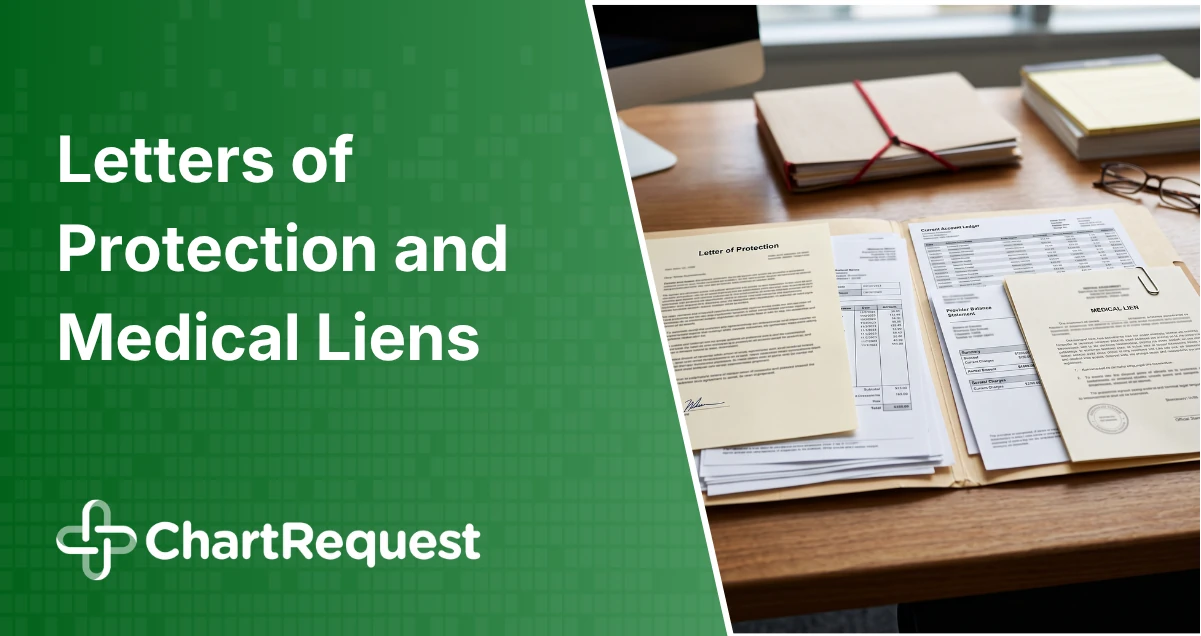


A letter of protection allows a medical provider to defer collection while a personal injury claim is pending. Letters of protection also make current medical and billing records especially important at settlement. Records used in the demand may no longer reflect the provider’s current account position.
The demand file documents the damages. The settlement file needs to show what each provider currently claims.
Before accepting a settlement, the firm needs enough current documentation to evaluate provider claims and estimate the client’s likely net recovery. It may not need every final balance at that point. Before disbursement, however, the file may need updated billing records, dated balances, and confirmed reductions. The legal team may also need separate documents supporting any claimed interest in the settlement funds.
Keep provider-held lien issues separate from Medicare, Medicaid, health plan reimbursement, workers’ compensation, and other third-party recovery claims, which follow different processes.

What Is a Letter of Protection in a Personal Injury Case?
A letter of protection (LOP) is a written agreement under which a medical provider defers collection for treatment. The provider expects payment from a future settlement or judgment. The document may also direct the patient or attorney to protect the bill from recovery.
A letter of protection can allow treatment to continue before the provider receives payment. The arrangement is not automatic. Its terms depend on the parties, the provider’s policies, and applicable law.
A letter of protection does not erase the medical bill. The patient may remain responsible if the case produces no recovery or insufficient funds. The agreement’s legal effect and the parties’ obligations depend on its language and applicable state law.
For example, Florida’s medical expense evidence statute defines a letter of protection for purposes of that statute. The definition covers treatment provided in exchange for a promise of payment from a judgment or settlement.
Letters of protection do not change which clinical records exist, but they can change when the firm needs to refresh billing and account information. The clinical chart may show treatment and medical necessity, while the billing office maintains itemized charges, payments, adjustments, and the current account balance.
Separate documents may sit elsewhere. The firm or provider may maintain the signed letter of protection. Another office may hold balance correspondence, reduction letters, assignment notices, or lien documentation.
Records collected for drafting a personal injury demand package can document treatment and damages without showing the provider’s current financial position at settlement.
Legal effect, enforceability, and settlement obligations require jurisdiction-specific legal analysis.
Is a Letter of Protection the Same as a Medical Lien?
No. Letters of protection and medical liens may relate to the same provider balance, but they are not interchangeable.
| Question | Letter of Protection | Medical Lien |
|---|---|---|
| What is it? | A payment arrangement or written commitment connected to a future recovery | A claimed legal interest in settlement or judgment proceeds that may arise under a statute or another recognized lien mechanism |
| Does the label establish legal status? | No. Its effect depends on the terms and applicable law | No. The claimant may need to satisfy requirements involving attachment, notice, perfection, or enforcement |
| Is filing always required? | A letter of protection is not automatically a recorded statutory lien | Some statutory liens require filing or recording; other lien mechanisms follow different rules |
| What records matter? | Current medical and billing records, account documentation, the agreement, and related correspondence | Current account support plus the notice, filing or recording documents, amendments, and other records supporting the claimed lien |
A provider may also have contractual payment rights or an assigned receivable without holding a perfected statutory lien. For example, Arizona requires a recorded statement to perfect certain healthcare provider liens.
An unpaid bill alone does not establish that a provider has a lien or another protected interest in settlement funds. The legal team should evaluate the documents under governing law instead of relying on the label attached to the account.
Which Medical and Billing Records Matter When Letters of Protection Are Involved?
For settlement preparation, the firm needs to understand the treatment history and the current financial position of each provider account.
A complete provider file should help the team answer six questions:
- Is treatment complete, and through what date are the records current?
- Which services and dates of service produced the charges?
- Which payments, credits, write-offs, adjustments, or reductions changed the account?
- What amount does the provider or account administrator currently claim?
- Which provider or billing entity issued that amount?
- Which separate agreement, assignment, notice, or lien document does the legal team need to evaluate alongside the medical and billing records?
The medical and billing record retrieval scope may include:
- Complete treatment records through the applicable cutoff date
- An itemized bill covering all relevant dates of service
- A complete account ledger or payment history
- Imaging or other clinical documentation relevant to the case
- Updated billing records when treatment continued after the demand
- Account documentation showing payments, credits, write-offs, or adjustments
The firm may need to obtain other settlement documents through a separate process. These may include the signed letter of protection, current written balance confirmation, reduction correspondence, assignment or transfer notices, and provider-held lien documentation.
These documents answer different questions. Medical records document treatment, while itemized bills and account ledgers show charges and account activity. The letter of protection documents the payment arrangement, while a lien notice or filing may support a separate legal interest.
One treatment location can also generate several separately maintained accounts. A hospital response does not necessarily include professional, radiology, anesthesia, ambulance, therapy, or other related billing files. The retrieval scope should account for every relevant billing entity, not only the facility where treatment occurred.
What Makes the Medical and Billing File Complete?
For settlement preparation, the retrieved records should identify the client and provider and cover the applicable dates of service. They should also give the team enough information to reconcile treatment with the associated charges.
Before final accounting, confirm that:
- Medical records cover treatment through the applicable cutoff date.
- Itemized billing covers the relevant dates of service.
- All known facility, professional, and ancillary accounts have been identified.
- The ledger reflects charges, payments, credits, write-offs, and adjustments.
- Outstanding medical or billing records are clearly identified.
- The legal team separately tracks any letter of protection, reduction, lien, assignment, or transfer documentation it still needs.
Keeping the retrieval scope connected to the medical record retrieval workflow for law firms preserves the provider list and request history from earlier in the case.

What Must Be Current Before Settlement and Disbursement?
For firms handling letters of protection, settlement creates two practical documentation checkpoints. One supports the decision to settle; the other supports final accounting and disbursement.
Before Settlement Is Accepted
The firm needs enough current information to evaluate likely provider claims and explain the expected client net.
That may require updated medical records if treatment continued after the demand, along with current billing and account information. The firm should also know which provider accounts remain open and where the financial picture is still uncertain.
Every final written resolution amount may not be available before the firm agrees to settle. The important point is knowing which amounts are current, which are estimates, and which still require confirmation.
Before Funds Are Disbursed
The financial file may require another update before disbursement.
Billed charges, the current ledger balance, and an agreed resolution amount are not the same figure. The settlement team needs to know which figure it is using, who issued it, which services it covers, and when it was current.
The legal team may also need separate documents involving reductions, assignments, transfers, letters of protection, or claimed liens. Those documents require their own legal review. Current medical and billing records give the firm the treatment and account information it needs alongside that analysis.
How Do the Required Records Change Across the Case?
The provider record should carry forward from demand preparation rather than be rebuilt at settlement.
| Case Stage | Records Needed |
| Treatment | Clinical records, initial billing, imaging when relevant, and provider account information |
| Demand preparation | Complete treatment records, imaging, itemized bills, and damages documentation |
| Settlement | Updated medical records when treatment continued, current itemized billing, account ledgers, and other refreshed financial records |
| Closeout | Final account documentation and any separate satisfaction, release, or zero-balance records the firm requires |
Letters of protection make that continuity especially important. The settlement-stage file is not a duplicate of the demand file. It refreshes the medical and financial information that may have changed after the firm completed the original requests.
Centralized retrieval preserves the provider list, request ownership, status history, and follow-up across each stage. The legal team can see which records supported the demand and which providers need updated medical or billing records for settlement. It can also see which requests remain outstanding.
Are Billing Records Connected to Letters of Protection Part of the HIPAA Designated Record Set?
Billing records maintained by or for a covered provider generally fall within the HIPAA designated record set. Under 45 CFR § 164.501, that set includes medical and billing records about individuals. The right of access under 45 CFR § 164.524 belongs to the individual.
A law firm’s request path may involve client-directed access, a valid authorization, or another applicable legal process. Our explanation of billing records under HIPAA covers that distinction in more detail.
The HIPAA designated record set does not mean every document associated with letters of protection will come back with a medical record request. A signed agreement, lien filing, assignment, transfer notice, or reduction letter may follow a different request path depending on who maintains it.
Why Missing Medical and Billing Records Can Delay Settlement and Disbursement
The firm may know the gross settlement while the medical or billing file still lacks current information. Treatment may have continued after the demand. A provider balance may not reconcile to the itemized charges. A professional or ancillary account may still be missing.
Common gaps include:
- Medical records that stop before the final treatment date
- An aging statement without itemization
- A balance that does not match the account ledger
- Missing professional or ancillary billing accounts
- Different amounts across current account documents
- Records that do not show payments, credits, write-offs, or adjustments
Each gap creates another follow-up cycle. Staff have to identify the right provider or billing office, request the missing records, reconcile the response, and update the settlement team.
Letters of protection can make those gaps more consequential because unresolved provider balances may affect the firm’s estimate of the client’s net recovery. Those balances can also affect the accounting required before disbursement.
Separate legal disputes over liens or other claims require their own analysis. ABA Model Rule 1.15(e) addresses property in which two or more people claim interests. It requires the lawyer to keep disputed property separate until the dispute is resolved. Comment 4 notes that qualifying third-party claims can include a creditor with a lien on funds recovered in a personal injury action.
ABA rules are models. Each jurisdiction’s rules and applicable law control, and an unpaid bill alone does not establish a protected interest.
The retrieval challenge is familiar. It is the same provider follow-up problem that delays medical record retrieval, now happening while the firm is trying to finalize settlement accounting.

How Can We Support Medical Record Retrieval When Letters of Protection Are Involved?
CaseBinder helps firms retrieve the medical, imaging, and billing records they need across a personal injury matter. Our retrieval experts handle provider follow-up and escalation so the legal team does not have to restart the chase every time it needs an updated record set.
When a matter involves letters of protection, that can include refreshing treatment records, itemized bills, and other provider billing records as the case moves toward settlement. Centralized status tracking shows which records have arrived, which requests remain outstanding, and which provider still needs follow-up.
We focus on retrieval. We do not retrieve or evaluate letters of protection, negotiate provider balances, determine lien validity, resolve reductions, or decide how settlement funds should be disbursed. Those responsibilities remain with the firm and the parties involved.
Schedule a CaseBinder workflow review to see how we can support the medical record retrieval around your PI settlement workflow.
Frequently Asked Questions
What Is a Letter of Protection?
A letter of protection is a written arrangement in which a medical provider defers collection in connection with a personal injury case. The provider expects payment from a future settlement or judgment. Its terms and legal effect depend on the document and applicable law.
Is a Letter of Protection the Same as a Medical Lien?
No. A letter of protection is generally a payment arrangement connected to a potential recovery. A medical lien is a claimed legal interest in settlement or judgment proceeds. It may arise under a statute or another recognized lien mechanism.
What Medical Records Do Firms Need When Letters of Protection Are Involved?
Firms may need complete treatment records, imaging, itemized bills, account ledgers, and updated billing records through the applicable settlement cutoff date. The exact scope depends on the treatment history, providers involved, and what the firm already collected for the demand.
Does a Firm Need Every Final Provider Balance Before Agreeing to Settle?
Not necessarily. The firm needs enough current information to evaluate provider claims and the client’s likely net recovery. The firm may still need to finalize balances, reductions, and other settlement documentation before disbursement.
Can ChartRequest Help With Records When Letters of Protection Are Involved?
Yes. Through CaseBinder, we can help firms retrieve medical, imaging, and billing records from providers while our retrieval experts handle follow-up and escalation. We do not retrieve or evaluate letters of protection or determine the legal effect of provider liens or other settlement claims.